
Ageing Well in Northern Coromandel

Our older residents are the people who hold this place together. They are the ‘growers’ and ‘builders’, the trustees and the volunteers, the people who know where the water pipes run.
Across the Thames-Coromandel District, 35% of residents are aged 65+, the highest proportion of any district in New Zealand (nationally it’s around 17%). The median age here is 52.9 years, with more than one in four residents aged 65+.
The Northern Coromandel has 29 named community and volunteer organisations and the highest rate of volunteering per capita in New Zealand, roughly one in three residents. When we consider our rate of volunteering against our population demographics, it is clear that our community needs and relies on our older residents. However, the flip-side is that they need us too.
This article is about how what we have here stacks up against what is needed for ageing-well, and the potential for how we can improve it.
What older people say they need
Asked what matters most for a good life as they age, older New Zealanders name five things: an adequate income, a place to live, social connectedness, being able to move freely around their community, and access to affordable health care. That finding comes from the Office for Seniors and is reported in Age-Proofing Aotearoa, the report issued by the Helen Clark Foundation in (2025). The government’s Better Later Life strategy, He Oranga Kaumātua, is built on five action areas that map closely onto the same list, and adds one more: making environments accessible.
Every one of these six pillars is constrained in the Northern Coromandel. One of them barely exists.
Adequate Income
Research for the Ministry of Social Development finds that while 54% of older New Zealanders are doing well across health, housing, finances, social connection and access to services, at least a third are vulnerable in one of those domains, and 13% face disadvantage in several at once. In the Thames-Coromandel District, approximately 42% of residents receive a low income, and people aged 65+ are heavily represented in that group. In the Northern Coromandel, the median household income is $27,100- 35% lower than the national average of $41,500. This raises several issues.
Where national incomes are higher, superannuation is supplemented by private savings and investments. In regions like ours with extremely low overall medians, seniors often lack access to these secondary income streams, creating a cycle of inadequate living standards.
Additionally, living in a remote rural area like the Northern Coromandel comes with a hidden financial burden often called the "rural premium." Because residents must travel significant distances just to access basic needs and services, fuel costs and vehicle wear-and-tear quickly become large, unavoidable expenses. Prices of everyday essentials like groceries and petrol are frequently much higher than in urban centres, as the complex logistics and steep freight costs of delivery are passed directly down to the consumer. For those living on fixed or limited incomes, this means that simply meeting everyday needs—getting out and about, putting food on the table, and visiting a doctor—requires a much higher demand on time, energy, and finances than it would anywhere else.
A place to live
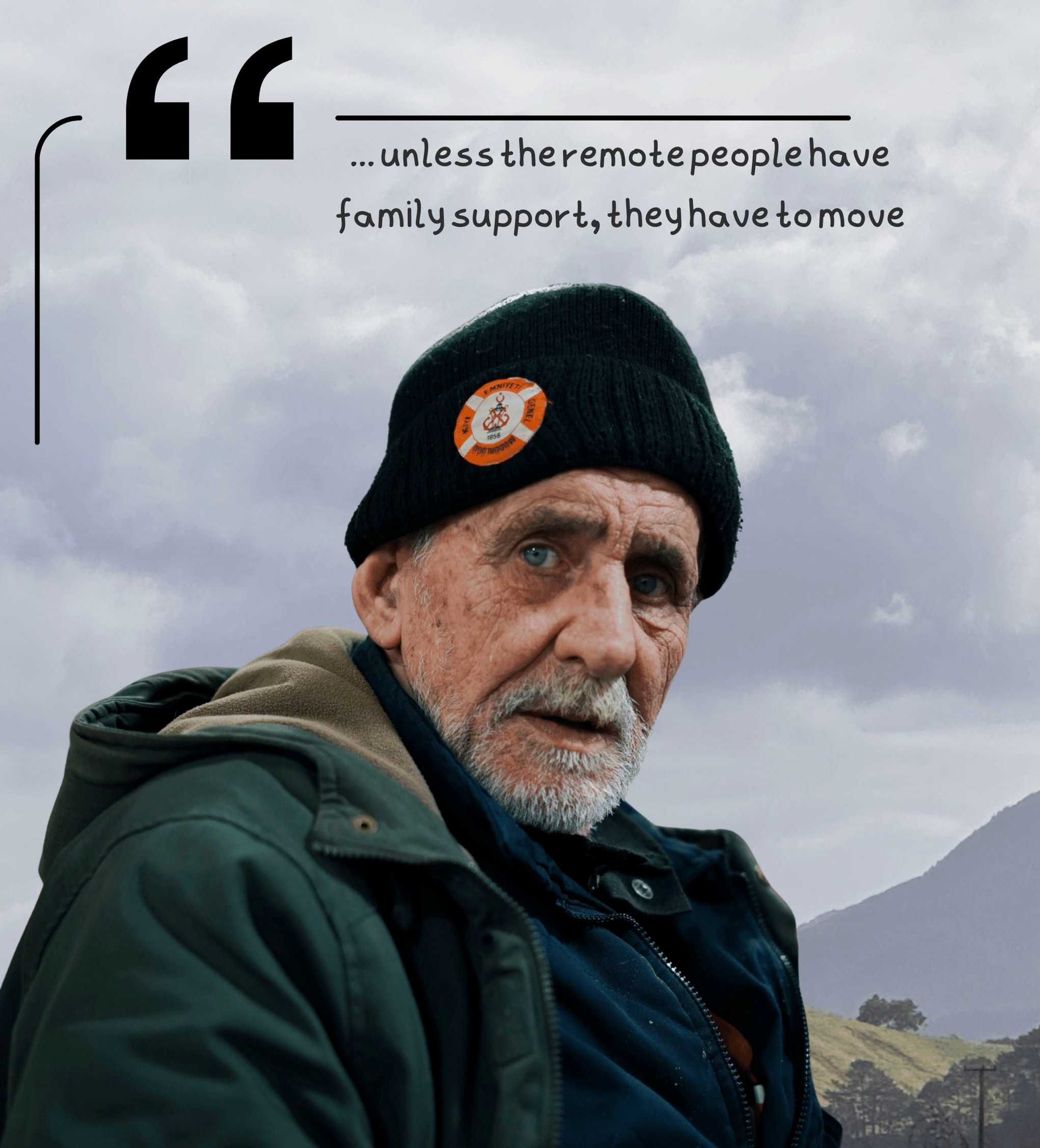
In the 2020 Age-Friendly Community Survey of the wider Coromandel-Colville Ward, 412 residents responded. Of these respondents: 89% owned their own home. 58% rated the availability of housing for low-income seniors as poor or very poor. 86% believed they would go on living in their community, moderated by just over half saying they would need services or modifications to their property in order to stay in it as they age. 14% thought they would move away, with one rural respondent plainly stating: unless the remote people have family support, they have to move.
The Northern Coromandel makes up the most remote part of this ward, with the widest-spread communities and the furthest distances to travel over the most challenging roads. Once unable to remain in their own home, community members unable to live with family are required by necessity to move out of the area as there are no local accommodation options. While there are six kaumātua units in Coromandel town, these already have a substantial waiting list, and visits by family would for most require a regular 1-2+ hour round trip.
Being able to move around
Transport was the single most significant issue the 2020 Age-Friendly Community Survey identified. Responses showed: 95% of respondents drive themselves (82% when considering those aged 80+) and they tied this directly to the lack of public transport. Those who do not drive rely on family and neighbours, or on the taxi in Coromandel Town (11%) - which is unavailable for our communities. Two-thirds said they would take a bus to Thames or Hamilton if one existed.
When transport options don't exist, the financial and emotional toll on older rural residents quickly multiplies. For those living on a pension or a fixed income, the sheer cost of petrol and vehicle maintenance can force an impossible choice between filling the tank or paying for other essentials.
In addition, the requirement to travel long distances can put intense pressure on individuals to keep driving long after health or age-related circumstances tell them it is no longer healthy or safe to do so—simply because they feel they have no other choice.
For those who can either no longer drive or no longer drive the distances required, independence shifts into dependence. Relying on family or neighbours for a ride might sound simple, but in the Northern Coromandel, a medical trip to Thames or Hamilton is a full-day commitment. It forces loved ones to take unpaid time off work and absorb the high fuel costs themselves, turning a simple doctor's appointment into a stressful, collective burden for the entire support network.
Health care you can reach
There is no longer a resident health professional in the Northern Coromandel. A visiting GP service runs one day per week. Community unable to get an appointment on this day, needing service outside this timeframe, or requiring services varying from a simple consult are required to travel to the clinic in Coromandel town. In our region this mostly means a 1-2+ hour round trip.

For more emergency or more specialist needs, Thames Hospital is 90 minutes away from Colville village in good weather, 120 minutes from Port Charles and 130 minutes from Port Jackson. Appointments at Waikato hospital require a further 85 minutes drive. These times double for the round trip.
Between 2019 and 2022, residents aged 65+ or over accounted for 48-55% of all clinical calls to then locally-resident GP service.
Although our community is very grateful to currently have a visiting GP, the bottom line is that when a community loses its full-time medical presence, the hurdle to seek care changes from a simple chore into a logistical mission. Preventative programmes struggle to reach people who have long travel times to attend them. Older residents frequently begin to delay or completely avoid seeking healthcare until a condition becomes an absolute emergency.
National data in Aotearoa confirms this reality, revealing that rural New Zealanders are up to 37% less likely to access hospital care or attend appointments compared to urbanites—a statistic driven not by a lower need for care, but by the sheer geographic and physical barriers of getting to it.
Accessibility & Social Connectedness
When asked what would improve the places they live, respondents of the 2020 Age-Friendly Community Survey named: footpaths and walking paths, pedestrian crossings, public seating, mobility scooter access, public toilets and disability parking.
However, in remote rural settings like ours, accessibility isn’t about urban infrastructure like pedestrian crossings or wheelchair ramps. It is about having meaningful destinations to go to once you step out the door. Sociologists call these spots "third places"— vital community hubs outside of home and work, such as libraries, community halls, community gardens, or local cafes.
Research consistently shows that frequenting these third places is a major social determinant of health for older adults, directly correlating with improved mental clarity, physical vitality, and a stronger sense of belonging. When a rural region lacks these accessible spaces for recreation and incidental chat, the risk of isolation sky-rockets.
A review of rural health services in the Southern region commissioned by WellSouth (2024), describes community hubs as essential third spaces in rural areas, for the delivery programmes that keep people out of hospital.
In our region, regularly available public ‘third places’ are largely limited to the Colville General Store, and the café. While specific programmes and events arise, these are frequently dependent on the suitability of the infrastructure we have. For example, a programme for older persons previously held at Colville Junction had to move due to both limited venue size and accessibility difficulties, and no other suitable venue could be identified in Colville village. This programme has now relocated to Coromandel town.
True rural accessibility means ensuring our older people have inviting, local places to gather, share a coffee, and linger without pressure - because staying connected is just as critical to ageing well as any medical check-up.
Improving ageing-well in the Northern Coromandel
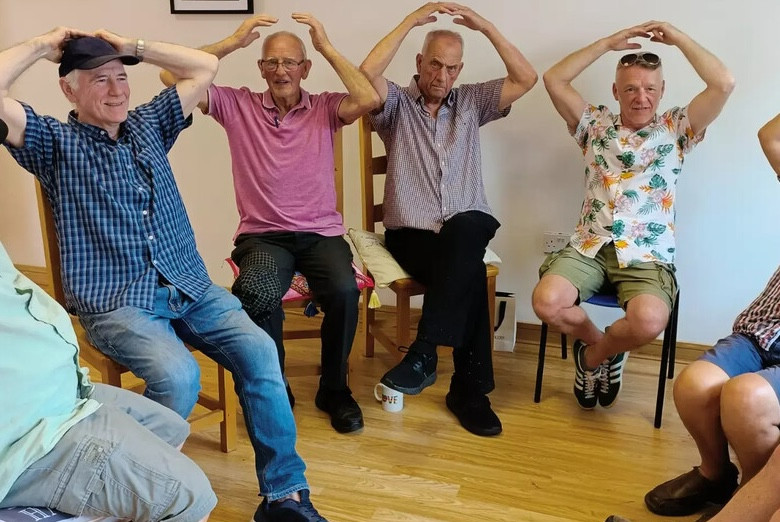
Congratulations go to Colville Junction, who have recently started a new service in the Northern Coromandel: Kōrero & Care. This free service provides practical in-home support and connection to community members aged 65+. The initiative provides some human infrastructure for ageing-well in this place, built on the back of small grants and a lot of will.
This determination to bring positive change, is a flagship-quality of our communities who continue to roll their sleeves up and make things happen.
When the 2020 Age-Friendly Community Survey asked ward residents whether they wanted a hub focused on the needs of older people, 91% of respondents said ‘yes’, and 46% offered to help build it. In the Northern Coromandel, this willingness and commitment is demonstrated by the community-raised funds which enabled the purchase of land for The Colville Project’s development.
The Colville Project (TCP) seeks to improve ageing in the Northern Coromandel by enabling appropriate infrastructure.
TCP’s Wellbeing and Education Centre includes a health wing, community spaces, meeting rooms, a library, and technology access – all active contributors to the pillars of ageing-well. Spaces designed for all ages, stages and abilities along with adequate storage, increase the scope of the services and programmes that can run in them. A room with a reliable connection, specialist equipment, and a trained health professional beside you, enables local reach into clinics and hospitals despite distance. Access to resources like a library and technology widens the world we live in.

TCP’s short-term accommodation for visiting professionals means that visiting health professionals can both stay overnight and run a full clinic day of appointments rather than losing such time to the drive. The 2020 Age-Friendly Community Survey indicated a need for somewhere where a family carer could bring their loved one so they themselves could get a break. TCP’s short-term accommodation will also be available for those with a need for respite care options or short-term frequent access to health services.
TCP’s role in housing is to provide land, enabling third-party providers to deliver both age-appropriate and family housing. These are both important social cohesion factors in a region with no elder-housing options and limited secure-tenure family housing options.
Overall, TCP is designed to remove barriers by enabling increased local support and in doing so, bring more equity-balance, including improved ageing-well outcomes, to our remote rural communities.

